
A digital textile printer roll to roll is designed for one thing: continuous, stable fabric printing, not stop-and-start sampling. For production buyers, the real decision isn’t “which printer is fastest,” but which workflow produces the most sellable meters per shift with predictable uptime.
This pillar guide explains the roll-to-roll workflow, where capacity is won or lost, which use cases justify industrial roll production, and what to evaluate before you shortlist systems.
If you’re already comparing models, start with Fluxmall’s roll-fed direct fabric systems here: https://fluxmall.com/en/catalog/direct-fabric/direct-fabric-digital-printers/
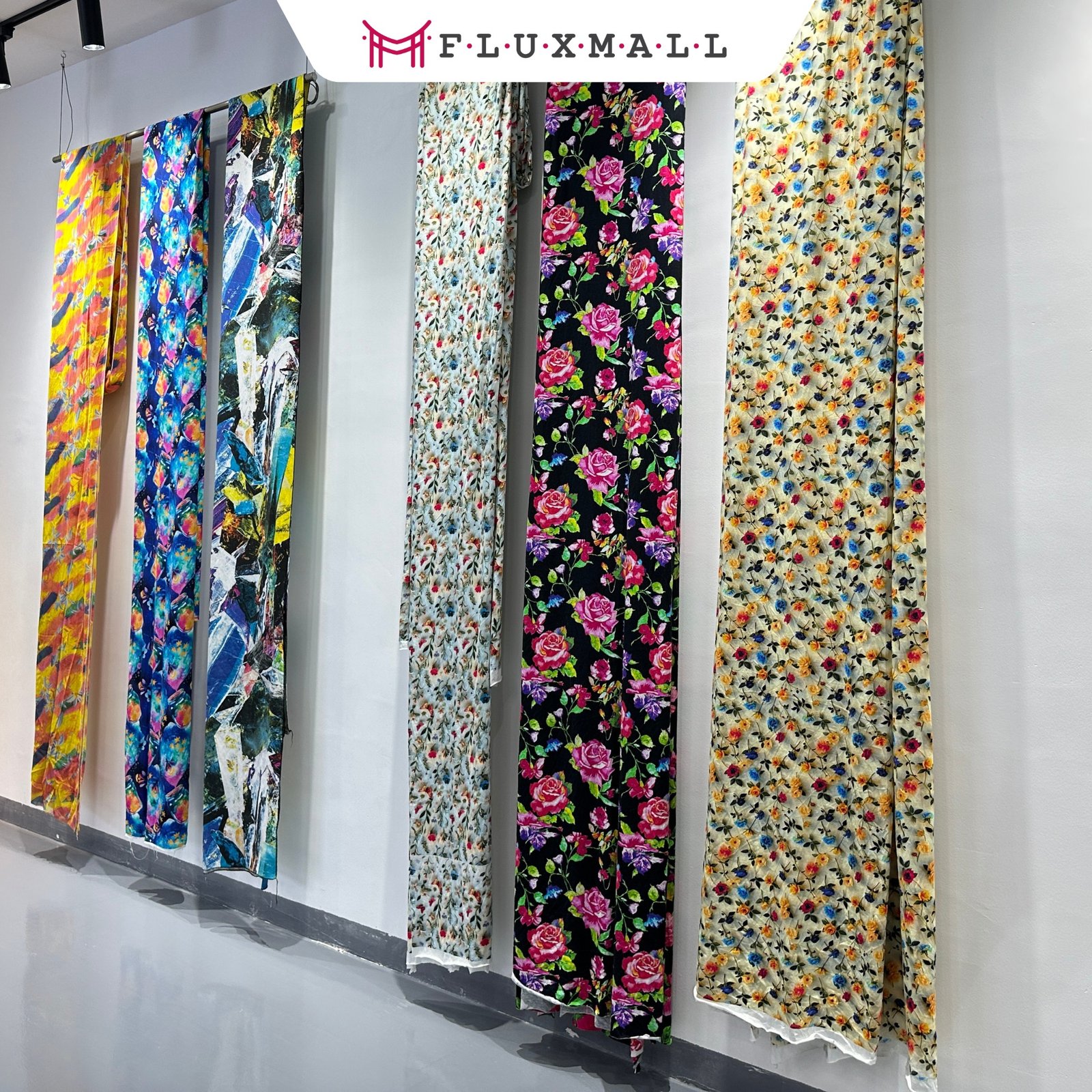
Fabric printing: Roll-to-roll workflow basics (what “continuous” really means)
In fabric printing, “roll-to-roll” refers to a controlled web-handling process: fabric unwinds, moves through printing and fixation/drying, then rewinds—while maintaining tension and alignment so the print stays consistent across long runs. Web handling (tension + lateral control) is a core requirement in roll-to-roll processes.
A practical roll-to-roll workflow typically includes:
Unwind + feed control
Your fabric is only as stable as your feed. Tension stability and tracking help prevent skewing, stretching, or banding issues that turn into rejects later.
Printing (continuous transport)
Industrial textile systems often use belt or transport mechanisms that prioritize stability during continuous motion – because micro-variation becomes visible over long meters.
Fixation / drying
This stage is frequently the true production constraint. Whether you’re using heat-based drying, steaming, or another approach depends on chemistry and fabric, but the key point is consistent, repeatable fixation—without creating a backlog of printed-but-not-finished fabric.
Rewind + QC
A fabric printing production line needs a repeatable check strategy (visual inspection, spot checks, and rework rules) so defects don’t travel downstream into cutting and sewing.
For finishing capacity planning, Fluxmall’s dryers and production drying equipment category is a helpful reference point: https://fluxmall.com/en/catalog/equipment/dryers/
Production textile printing: Capacity considerations (the line is only as fast as its slowest station)
In production textile printing, capacity should be measured as: finished, rewound, QC-approved meters per hour — not just print speed.
To avoid overbuying the printer and underbuilding the workflow, look at the line as stations. Here’s a simple way to spot constraints:
| Station | What limits output in real production | What to verify during evaluation |
|---|---|---|
| Feed/unwind | tension instability, edge tracking issues | fabric types you’ll run (stretch, knits, slippery weaves) |
| Print transport | stability at production speed | repeatability over long runs (not just 10 meters) |
| Fixation/drying | insufficient drying/fixation capacity | “Can finishing keep up with peak print output?” |
| Rewind/QC | inspection slows the line, rework chaos | defect rules + how reprints/rework are handled |
If you’re building a factory roadmap (not just a machine purchase), Fluxmall’s overview on selecting a factory printing method helps frame the “system first” mindset: https://fluxmall.com/en/how-to-choose-the-right-printing-method-for-your-factory/
High throughput fabric printing: Production use cases that justify roll-to-roll
High throughput fabric printing makes the most sense when you need continuous output, stable color over long runs, and fast changeovers compared with traditional processes.
Common production-driven use cases include:
Apparel fabric runs (cut-and-sew supply)
When you’re printing fabric for downstream cutting, consistency matters: repeatable color, stable shrink behavior after fixation, and predictable delivery windows.
Home textiles (curtains, bedding, upholstery fabrics)
These products often benefit from roll efficiency and repeatable pattern runs, especially when you’re managing multiple designs across predictable widths.
Soft signage and decor fabrics
Roll-to-roll is a natural fit when output is measured in meters and finishing steps are part of standard production flow.
If you’re evaluating systems marketed specifically for industrial output, Textalk production-class platforms on Fluxmall (for example TKD and TK-series fabric printers) are positioned around continuous, high-capacity workflows:
- TKD20 Series (production capacity positioning): https://fluxmall.com/en/product/textalk-tkd20-series-fabric-digital-printer/
- TK18 Series (multi-level speeds positioning): https://fluxmall.com/en/product/textalk-tk18-series-fabric-digital-printer/
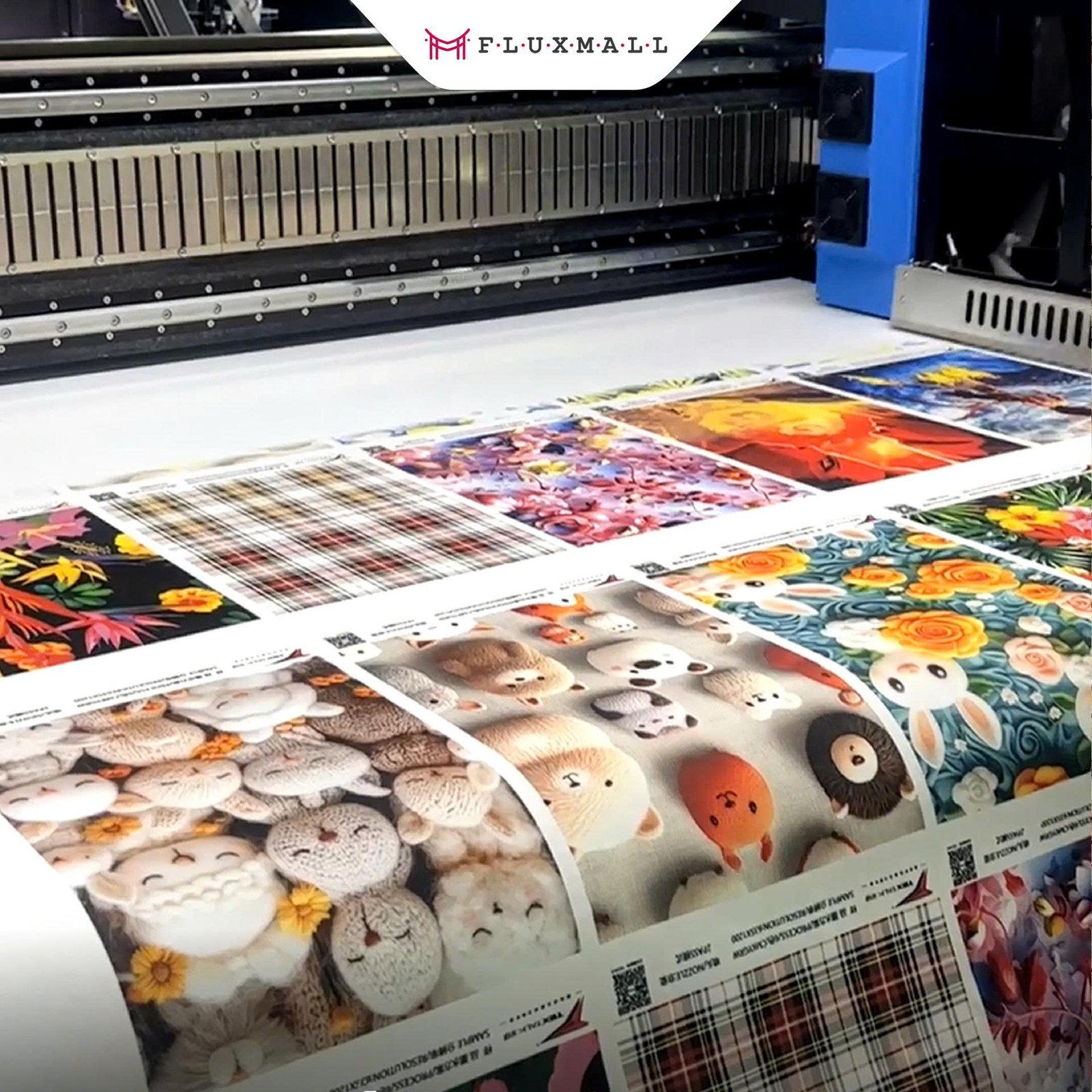
Wide-format textile printer: Key evaluation criteria for industrial environments
A wide-format textile printer isn’t just about maximum width – it’s about stable transport, predictable output, and serviceability under production pressure.
When you shortlist industrial roll-to-roll systems, evaluate these areas:
1) Media handling and transport stability
Ask how the system maintains alignment and tension over long runs – especially for knits, elastic blends, or lightweight fabrics.
2) Width and scalability options
Wide format is valuable when it matches your product mix (e.g., home textiles, signage, multi-panel layouts). For example, Fluxmall’s Textalk TK20 Series highlights wide print width (up to 2 meters) and stability positioning: https://fluxmall.com/en/product/textalk-tk20-series-fabric-digital-printer/
3) Throughput you can actually finish
Industrial buyers should ask one simple question: “At our target quality level, can fixation/drying + rewind + QC keep up?” If not, your “high throughput” claim becomes WIP, overtime, and rework.
4) Maintenance and uptime planning
In industrial environments, uptime is operational—not theoretical. Ask vendors for:
- daily maintenance routines and how long they take
- what failures stop production most often
- service response expectations and spare strategy
5) System direction (how it fits your factory workflow)
The “right system” is the one that fits your constraints: fabric types, finishing capabilities, staffing, space, utilities, and quality targets.
If you want a quick overview of wide-format and throughput positioning from the Textalk fabric lineup, this feature page is a useful starting point: https://fabric.textalk.business/textalk-features/
Digital textile printer roll to roll: How to shortlist systems for an industrial demo
When you’re ready to compare a digital textile printer roll to roll system seriously, the fastest way to de-risk the decision is to standardize what you test.
Bring (or send) vendors:
- your real fabrics (including the most problematic one)
- two real designs (one solid-fill heavy, one gradient/detail heavy)
- your target quality requirements (hand feel, durability, consistency expectations)
- your required “finished meters per shift” target (so the vendor must account for finishing capacity)
Then validate the complete workflow, print and finishing, so you’re buying a production direction, not just a printer spec sheet.
To run a hands-on evaluation with Textalk systems through Fluxmall, you can book a demo here: https://fluxmall.com/appointments/book-demo-textalk-printer/